
The wellness tech industry wants you to believe that a wearable band or smartphone app can solve your stress problems. Advertising promises quick relief from anxiety with just a few minutes of daily use. But when you look past the marketing claims and examine what research actually says, the picture gets more complicated.
Some stress reduction devices have legitimate science supporting their effectiveness. Others are riding the wellness wave with minimal evidence to back up their promises. Understanding which category a device falls into requires looking at peer-reviewed studies rather than customer testimonials.
Understanding Your Body’s Stress Response
Stress triggers a cascade of physical changes. Heart rate increases, blood pressure rises, and muscles tense up. This response comes from the sympathetic nervous system preparing your body for immediate action.
The parasympathetic nervous system operates in the opposite direction. It slows heart rate, lowers blood pressure, and promotes a state of calm. The most effective devices work by influencing these systems, though the methods vary considerably.
Heart Rate Variability Biofeedback Has Strong Research Support
HRV biofeedback stands out among stress reduction devices because of its substantial research base. This approach measures the time variation between consecutive heartbeats. Greater variability typically indicates better stress resilience and emotional regulation capacity.
A meta-analysis examining 24 studies with 484 participants documented significant reductions in self-reported stress and anxiety. The effect size reached 0.83, which represents a meaningful clinical difference rather than a marginal improvement.
The mechanism involves breathing at approximately 5.5 breaths per minute. This specific rate creates resonance between breathing patterns, heart rate oscillations, and blood pressure rhythms. Regular practice appears to strengthen the body’s stress regulation systems over time.
Research published in Applied Psychophysiology and Biofeedback has tested this method across diverse populations. Studies have included healthy adults, patients with cardiovascular conditions, and people experiencing depression. Results remain consistent across these different groups, suggesting the approach has broad applicability.
Practical Implementation
Modern HRV training doesn’t require specialized laboratory equipment. Many current smartphones can measure heart rate through their built-in cameras. Users receive visual feedback showing how their breathing pattern influences heart rate variability in real time.
Most protocols recommend daily sessions lasting 10 to 20 minutes. Benefits accumulate gradually over several weeks rather than appearing immediately.
Some research in Scientific Reports has documented improvements extending beyond stress reduction to include better sleep quality and enhanced athletic performance.
The Mixed Evidence for Wearable Devices
Smartwatches and fitness trackers make up a significant portion of the stress device market. A scoping review identified 31 studies reporting stress reduction through wearable interventions.
However, most of these studies tested university students in controlled academic environments, which raises questions about how well results translate to real-world settings.
Measurement accuracy varies considerably across consumer devices. Research indicates that simple heart rate averaging, which many devices use, provides less accurate stress detection compared to HRV measurements or electrodermal activity monitoring. If a device can’t accurately detect stress, its feedback loop becomes less reliable.
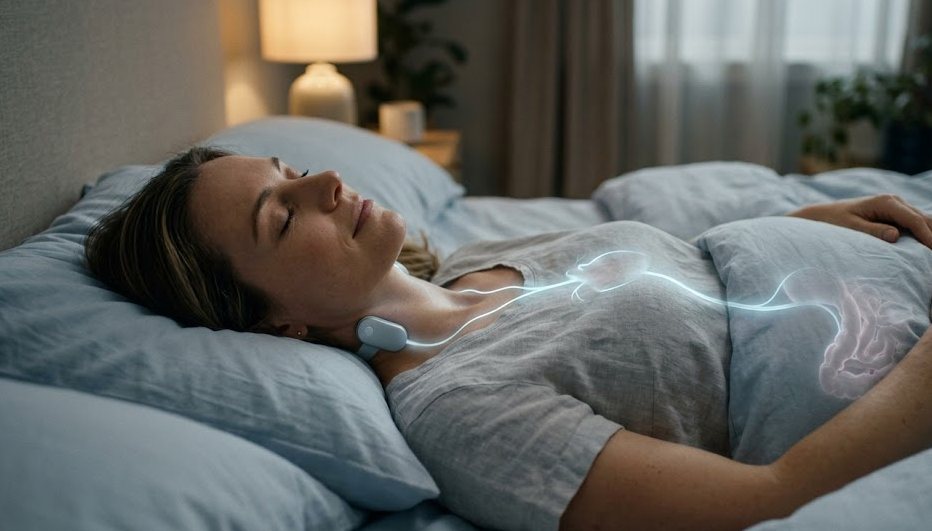
Some wearables deliver gentle vibrations intended to promote relaxation. Preliminary research has examined devices that provide slow, rhythmic vibrations during stressful situations.
One study involving healthcare workers found stress scores decreased by more than 40% within two weeks. These results look promising but come from small sample sizes. Larger independent trials would strengthen confidence in the findings.
What Research Shows About Breathing Devices
Devices designed to guide breathing exercises range from handheld units to smartphone applications. They provide visual cues, tactile feedback, or audio guidance to help users maintain specific breathing patterns.
The foundation, controlled breathing reduces physiological stress, has solid scientific backing. Extending exhalation duration relative to inhalation activates the parasympathetic nervous system. This shift decreases cortisol levels and other stress markers.
The question becomes whether dedicated devices add value beyond simple breathing practice without technology. A 2025 study in Scientific Reports tested a smartphone-based intervention with heart rate biofeedback. Participants using biofeedback showed stress reductions with an effect size of 0.41.
This exceeded average effect sizes found in meta-analyses of smartphone stress interventions. Participants without biofeedback showed smaller, statistically insignificant changes.
These findings suggest the feedback component matters. Seeing real-time physiological changes helps users understand when they’ve achieved the intended relaxed state.
Evaluating Device Effectiveness
Several patterns emerge when examining research on stress reduction devices:
Published studies in peer-reviewed journals provide more reliable evidence than company-sponsored white papers or testimonial collections
Sample size matters significantly -studies with 20 participants offer less certainty than those with 200
Control groups are necessary to separate device effects from placebo responses or natural stress fluctuations
Independent replication strengthens confidence in initial findings
Long-term follow-up data shows whether benefits persist after the study period ends
Devices Using Alternating Stimulation
Some newer products use bilateral alternating stimulation derived from therapy techniques. These devices typically deliver alternating tactile sensations to each side of the body.
One manufacturer-sponsored study reported a 74% stress reduction within 30 seconds of use. While the magnitude seems impressive, independent researchers haven’t yet replicated these findings.
The theoretical mechanism relates to shifting autonomic nervous system balance, but more rigorous testing would clarify actual effectiveness.
Factors to Consider Before Purchasing
Cost varies dramatically in this market. Some effective approaches cost nothing beyond a smartphone you already own. Other devices retail for several hundred dollars despite having minimal research support. Price doesn’t correlate reliably with effectiveness.
Time commitment represents another consideration. HRV biofeedback typically requires daily practice for several weeks before benefits become noticeable. Some acute stress management tools claim faster results but may not build long-term resilience.
Research quality matters more than marketing budget. Look for:
Studies published in established scientific journals
Research conducted by university or medical center teams
Adequate sample sizes (generally 50+ participants)
Inclusion of control or comparison groups
Follow-up measurements weeks or months after initial testing
Individual Variation in Response
Not everyone responds identically to the same intervention. Some people show dramatic improvements with HRV training while others see modest changes. Genetic factors, baseline stress levels, and consistency of practice all influence outcomes.
This variation makes universal claims problematic. A device backed by good research might work well for many users but provide minimal benefit to others. Setting realistic expectations helps avoid disappointment.
The Broader Context
No device addresses the root causes of chronic stress. Work demands, relationship difficulties, financial pressures, and health concerns require direct attention. Stress reduction devices can help manage physiological symptoms, but they don’t solve underlying problems.
Regular exercise, adequate sleep, social connection, and addressing stressors directly remain fundamental to stress management. Devices might complement these approaches but can’t replace them.
What the Evidence Actually Supports
HRV biofeedback has accumulated the most convincing evidence for stress reduction. Multiple meta-analyses confirm its effectiveness, and the mechanism has clear physiological explanations. Implementation costs remain low since smartphone sensors can handle basic measurement needs.
Wearable devices show promise but need more rigorous testing outside academic settings. Current research suggests potential benefits but doesn’t provide the same level of certainty as HRV biofeedback studies.
Breathing-focused devices work primarily because breathing exercises themselves reduce stress. Adding biofeedback appears to enhance outcomes based on available research, though the improvement may be modest.
Newer technologies using alternating stimulation or other novel approaches lack sufficient independent research for confident conclusions. Initial studies might look promising, but replication by independent research teams hasn’t occurred yet.
Making an Informed Decision
Start by examining research rather than marketing materials. Company websites naturally emphasize positive findings while minimizing limitations or negative results. Independent scientific publications provide more balanced assessments.
Consider your willingness to practice regularly. Even the best-researched devices require consistent use over weeks or months. A sophisticated device that sits unused provides zero benefit.
Approach dramatic claims with skepticism. Instant stress relief or complete anxiety elimination rarely occurs through any single intervention. Gradual improvement through regular practice represents a more realistic expectation.
The stress reduction device market will continue expanding as technology advances. Some innovations will prove genuinely helpful while others fade once initial hype subsides. Relying on published research rather than advertising helps separate promising technologies from overhyped products.
Stress management remains fundamentally about addressing both physiological symptoms and underlying causes. Devices can serve as useful tools within a comprehensive approach, but they work best when combined with other evidence-based strategies for managing stress.





Write a comment ...